The 14 EU allergens: what a Ukrainian café in Europe needs to know
Which 14 allergens the EU requires you to declare, how to inform guests in the dining room and online before they order, and how to translate ingredients.
Vitrina team5 minute read
Contents
In short
The EU requires you to tell guests about 14 allergens, also for unpackaged dishes you serve in the dining room.
For online orders, allergen information has to be available before the order is placed.
The form in the dining room (the menu, a sign or a word from the waiter) is decided by each EU country.
Guests see the allergen marks on the menu website in their own language, and a person checks the ingredients.
What the law requires
Food information for consumers in the EU is governed by Regulation (EU) No 1169/2011. For prepacked products it requires full labelling, but for dishes a café serves without packaging one thing remains mandatory: allergen information. That covers the dining room, pickup and delivery alike.
14
substances and products causing allergies or intolerances are listed in Annex II of the regulation, and guests must be told about them
Source: Regulation (EU) No 1169/2011
The provision of the particulars specified in point (c) of Article 9(1) is mandatory.
These are the 14 allergens
| Allergen | What it covers |
|---|---|
| Cereals containing gluten | Wheat (including spelt and khorasan), rye, barley, oats and products made from them |
| Crustaceans | Prawns, crabs, crayfish, lobsters and products made from them |
| Eggs | Eggs and products made from them |
| Fish | Fish and products made from it |
| Peanuts | Peanuts and products made from them: a separate item, not “nuts” |
| Soybeans | Soy and products made from it |
| Milk | Milk and products made from it, including lactose |
| Nuts | Almonds, hazelnuts, walnuts, cashews, pecans, Brazil nuts, pistachios, macadamia |
| Celery | Celery and products made from it |
| Mustard | Mustard and products made from it |
| Sesame | Sesame seeds and products made from them |
| Sulphur dioxide and sulphites | More than 10 mg per kilogram or litre, expressed as sulphur dioxide |
| Lupin | Lupin and products made from it |
| Molluscs | Mussels, oysters, squid, snails and products made from them |
For some items the regulation makes exceptions, for example for wheat-based glucose syrups or fully refined soybean oil. If a dish contains such an ingredient, check the text of Annex II rather than guessing.
Online orders: before checkout
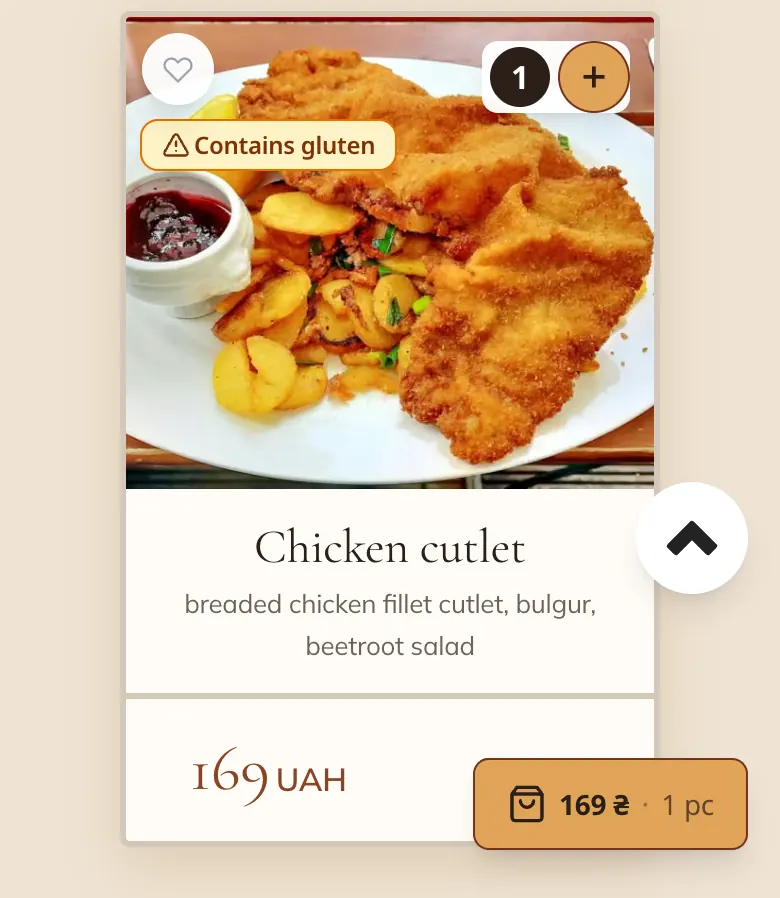
For food sold at a distance (through a website, an app or by phone), the regulation requires allergen information to be available before the guest places the order, and at the moment of delivery (Article 14). So the marks belong on the dish card, not only on the receipt or the bag.
In the dining room: how to inform guests
For unpackaged food, the form of the information is set by each EU country (Article 44(2)): in some, allergens must be written on the menu; in others, a sign and a spoken answer from staff are enough, provided the written list is available on request. Check the rules with the food safety authority of your country.
What to prepare in the dining room
An allergen list for every dish, and a person who keeps it up to date.
Marks on the menu, or a sign telling guests where to ask about allergens.
Staff who know where to check the ingredients and never answer “I don’t think so”.
Separate boards and utensils for dishes you serve as “free from”.
Translating the ingredients
A Ukrainian café in the EU usually shows its menu in several languages, and the ingredients must be accurate in each of them. Allergen marks are simpler than text here: you set them once, and the menu website shows the allergen’s name in the guest’s language. The ingredient description is translated as well. We explain how in our article on menu translation.
How Vitrina does it
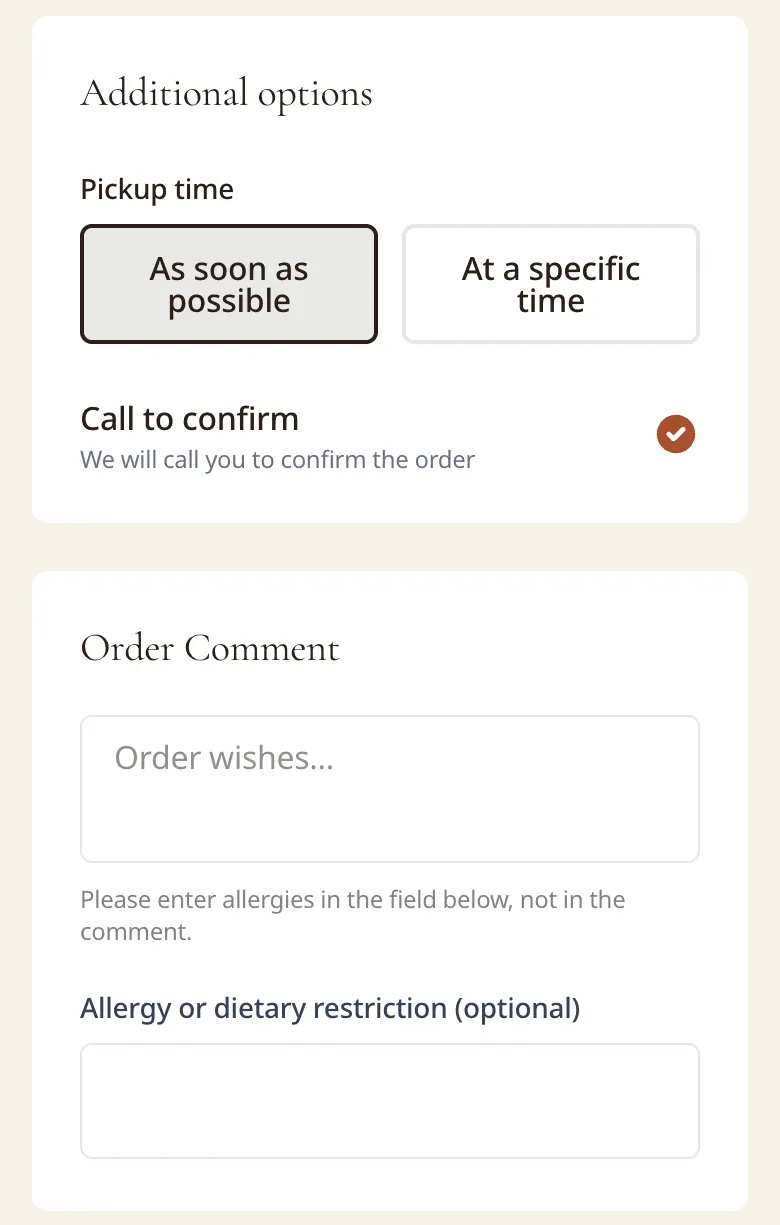
Vitrina has marks for all 14 EU allergens, in the order of Annex II. The guest sees the mark on the dish card before ordering, in their own language, once a person has checked it. Checkout has a separate allergy field, and on the kitchen ticket (from the “Full” plan) it is printed as the first line of the comment. AI translates dish names and descriptions at the press of “Translate menu” and marks them “review” until you have checked them.
Frequently asked questions
Do I need to declare allergens if my café only sells takeaway and delivery?
Yes. For food sold online or by phone, allergen information must be available before the order is placed and at the moment of delivery: that is Article 14 of Regulation (EU) No 1169/2011.
Can allergen information be given verbally?
It depends on the country: the form of information for unpackaged food is decided by each EU member state. Even where a spoken answer is allowed, keep a written ingredient list at hand and check the local rules.
Is a “contains nuts” mark enough?
It is better to name the allergen the way the regulation does: “nuts” means eight specific kinds, and peanuts are a separate item. In Vitrina the marks match all 14 items. More on the QR menu page.