How to open a café or coffee shop: a plan from idea to first guest
Concept, money before opening, EU paperwork, menu and website, a soft launch: a step-by-step plan for opening a café or coffee shop.
Vitrina team8 minute read
Contents
In short
Most venues do not close in their first year: research does not back the nine-out-of-ten myth.
Start with the guest and the format, not the fit-out: location, menu and budget depend on them.
Count the money you need before opening, including a reserve for the first months.
In the EU, food law gives every country the same base: register the establishment, run food safety procedures, train the team.
Set up the menu and online ordering before you open, so your first guests can find you and order.
How many venues really close
People say nine restaurants out of ten close in their first year. A study at The Ohio State University did not confirm this: Professor H. G. Parsa counted every venue in Columbus, Ohio, using health department data for 1996-1999, not just bankruptcies. About 26% of venues closed in the first year, and 59% within three years. The data is old and American, but the lesson travels well: the risk is high, yet failure is not a foregone conclusion.
59%
of venues in Columbus closed within their first three years
Source: The Ohio State University
61%
among independent venues over the same three years
Source: The Ohio State University
57%
among franchised chain venues over the same three years
Source: The Ohio State University
What share of venues closed in each of their first three years
- First year26%
- Second year19%
- Third year14%
Concept: guest, format, location
Start not with the fit-out but with the answer to who your guest is and why they will come. A student near the university needs a quick coffee to go, a family in a residential area needs seating and desserts, an office needs lunch delivered. Format, floor space, menu and even opening hours depend on the guest, so test your concept before you sign a lease.
Test your concept before looking for premises
Who your guest is and when they come: morning, lunchtime or evening.
Format: coffee to go, seating, pickup, delivery or several at once.
Location: how many people walk past and whether you can be seen from the street.
A short menu at the start, with a few dishes people will remember you for.
Neighbours: who nearby already sells the same thing and how you will be different.
Money before opening
A launch budget is more than the fit-out and equipment. The reserve is what people forget most often: in the first months revenue rarely covers costs, while rent and wages are due from day one. Before you open, calculate the food cost of your main dishes and your expected average check: together they show how many guests a day you need to break even.
| Item | What to consider |
|---|---|
| Rent and fit-out | Rent deposit, ventilation, power and water for kitchen equipment |
| Equipment | Coffee machine, fridges, tableware: what to buy and what to lease |
| First purchase | Food, drinks and packaging for the first weeks |
| Team | Wages for training before opening and health checks where required |
| Website and marketing | Menu with photos, signage, a Google profile, first promotions |
| Reserve | Money for several months of trading until revenue covers costs |
If you plan to deliver, count the aggregator commission too: aggregators bring new guests but take a percentage of every order. On your own Vitrina website you pay no more than 0.9% (3% with no subscription) on online orders, and the calculator shows the difference at your rate.
Paperwork in the EU: what every country has in common
Licences and permits differ from country to country and even from city to city, so the exact list comes from your municipality and your accountant. But EU food law gives everyone the same base: Regulation (EC) No 852/2004 requires every food business operator to notify the competent authority of each establishment so that it can be registered, to run food safety procedures based on HACCP principles, and to make sure the people who handle food are trained in food hygiene.
- 1
Register the business
As a sole trader or a company, under your country’s rules, and register for tax.
- 2
Sort out the premises
A lease or ownership, plus whatever your city requires for a café: permitted use of the premises, signage, a terrace.
- 3
Register the establishment
Notify the food authority before you open, as Regulation (EC) No 852/2004 requires.
- 4
Set up food safety
Procedures based on HACCP principles and food hygiene training for everyone who handles food.
- 5
Prepare allergen information
Guests must be able to find out which allergens each dish contains: see our article on allergens in the EU.
- 6
Hire the team
Employment contracts and social insurance registration under national law.
Menu and website before opening
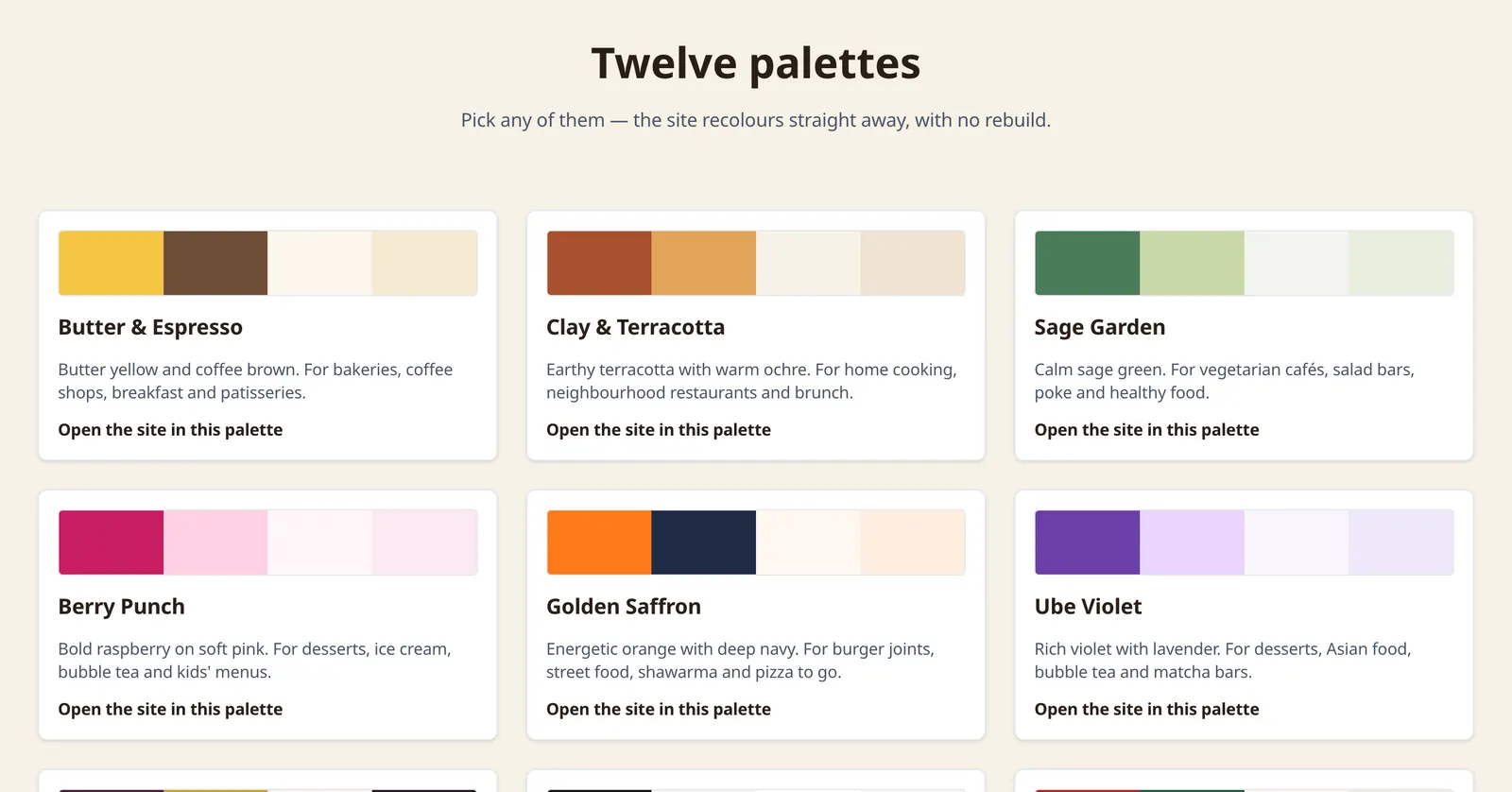
Guests look a venue up on the map and check the menu before they come. So before opening you need a menu with photos, prices and ingredients, a Google profile and a website where people can order pickup or delivery. A QR code on the table leads to the same menu, so there is nothing to reprint when prices change. Choose the look of the website in advance too: colours and fonts should match your signage and interior.
A soft launch and the first weeks
- 1
Soft launch
A few days for friends and neighbours: the kitchen and floor get used to the flow, and you collect feedback.
- 2
Google profile
Address, opening hours, photos and menu, so people find you on the map.
- 3
First reviews
Ask your first guests to leave a review and reply to every one.
- 4
A reason to come back
A loyalty programme or a bonus for the second order.
- 5
Numbers every week
Revenue, number of orders, average check and food cost: what changed and why.
How to work with reviews is covered in our article on Google reviews, and how to bring guests back in our article on coffee shop loyalty.
How Vitrina helps
Vitrina takes care of the online side of opening. The “Start” plan already includes a website on your own domain with the menu, a QR code to it, automatic menu translation, pickup, delivery and online payment, plus reviews with moderation and ordering via the QR code on the table. The “Restaurant” plan adds table booking, paying the bill from the guest’s phone, a loyalty programme and promo codes, and “Full” adds stock with recipes and owner analytics. The launch application takes a few minutes: name, website languages, palette, fonts and plan, and you see a preview of your website before you send it.
Frequently asked questions
How much does it cost to open a café?
Nobody can name a figure until the city, floor space and format are known: coffee to go from a kiosk and a café with seating and a kitchen differ many times over. Build your budget from the items in the table above and be sure to set aside a reserve for the first months.
What paperwork do I need to open a café in the EU?
It depends on the country and the city, but everywhere you register the business, register the establishment with the food authority, run food safety procedures based on HACCP principles and provide allergen information. More details above, in the section on paperwork.
Does a café need a website from day one?
Yes, if you want to take pickup and delivery orders directly, not only through an aggregator, and have a menu that is easy to change. See how it works on the online ordering page.