How to raise the average check at your café without discounts or pressure
Portions, sides and add-ons, a free-delivery nudge, combos and the order of your menu: what raises the average check online and in the dining room.
Vitrina team5 minute read
Contents
In short
The average check grows not from pressure but from well-timed offers.
Portions and add-ons give guests a choice and add to the check.
A free-delivery threshold and combos prompt guests to add one more item on their own.
Measure the average check for each channel separately: dining room, pickup and delivery behave differently.
What the average check is
The average check is revenue for a period divided by the number of orders. There are two ways to raise it: guests take more items or pricier items. Both work only if it is genuinely convenient and worthwhile for the guest, not because someone talked them into it.
Portions and options
Two portions of the same dish give guests a choice without much thinking: a small one for a snack, a large one when hungry. Check the margin of both portions against the recipe and show the more profitable one first: the guest sees it as soon as they open the dish.
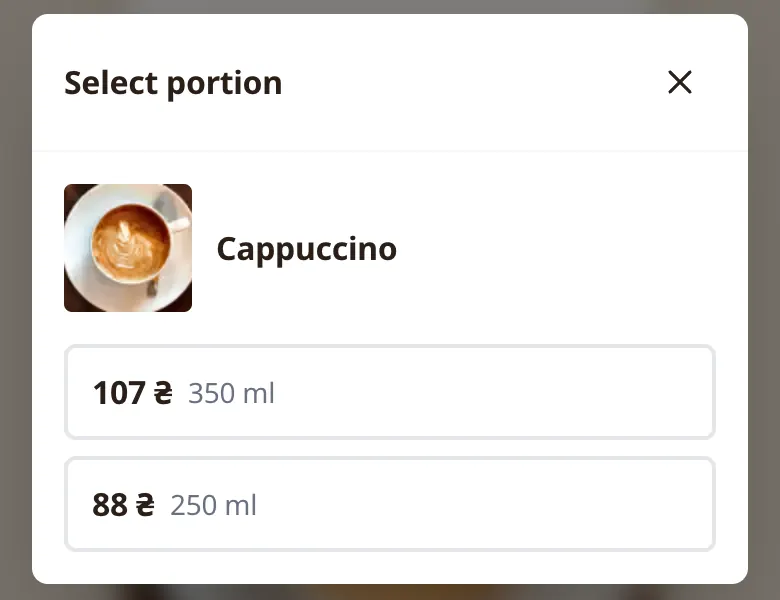
Sides and add-ons
A side for the main course, a syrup for the coffee, a sauce for the potato pancakes: small add-ons raise the check almost unnoticed by the guest, as long as they are offered exactly when the guest is choosing the dish.
Add-ons that work
Related to the dish: a sauce for meat, a syrup for coffee.
Inexpensive compared with the dish itself.
Visible right when choosing, not hidden in a separate section.
No more than three or four options, so the guest doesn’t get lost.
An offer before checkout
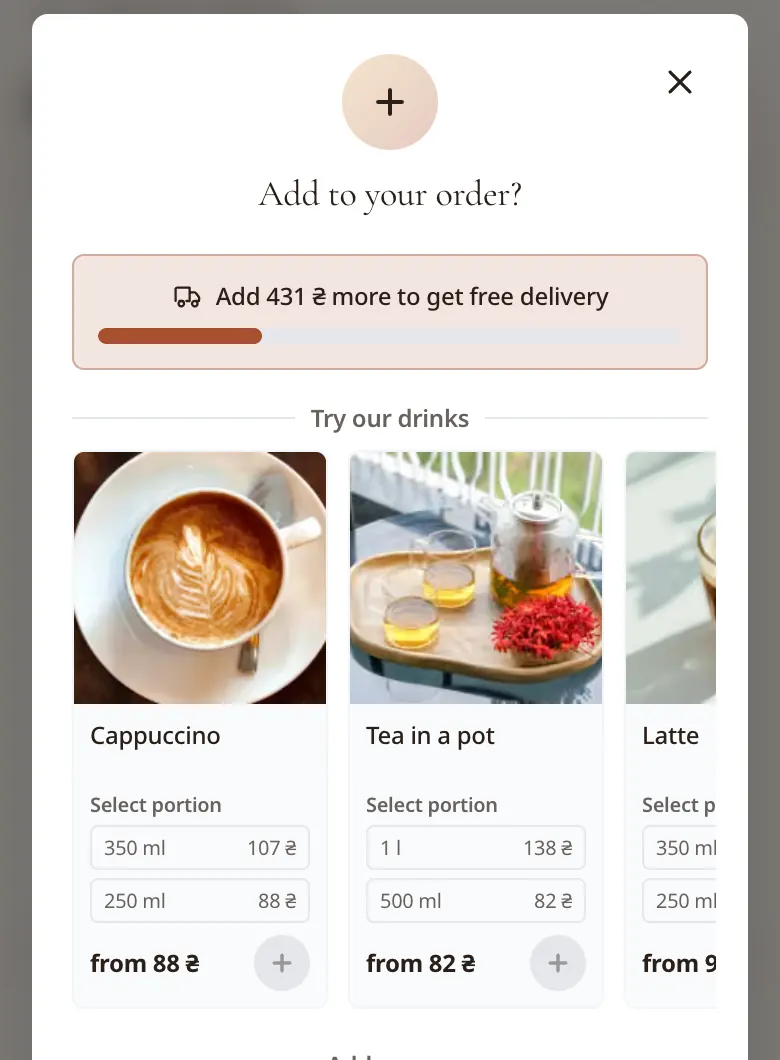
Before paying, the guest has already decided what to order and is ready to add something small: a drink with the meal, a dessert with the coffee. One offer with a few items works better than pushy pop-ups at every step.
The free-delivery threshold
A free-delivery threshold works as a hint: the guest sees that only a small amount is missing and adds a drink or a dessert. Set the threshold a little above your typical delivery check, so it feels worth reaching, and show how much is left right in the basket.
Combos and sets
A combo sells several dishes in a single choice: soup, a main and a drink. The guest saves time, and the café sells items that would be ordered less often on their own. The combo price should be easy to understand: one honest discount is better than complicated conditions.
How Vitrina does it
A Vitrina website shows portions and options of dishes, offers sides and sells combos priced from their items and a discount. Before checkout it suggests drinks, soups or desserts and shows how much is left until free delivery. Sold-out dishes never appear in the suggestions, and the guest can decline with a single “No, thanks” tap. The average check is visible in the owner’s analytics (the “Full” plan).
Frequently asked questions
How do I calculate the average check?
Divide revenue for a period by the number of orders in the same period. Calculate it separately for the dining room, pickup and delivery: each channel has its own check.
Don’t “add something more” offers put guests off?
Pressure puts guests off, not the offer. One fitting offer that can be declined with a single tap feels like care, while pop-ups at every step are annoying.
What works better: a discount or a combo?
A combo sells a set of items and keeps the prices of individual dishes, while a discount simply lowers the total. How to find out which dish earns money is explained in our article on menu engineering.